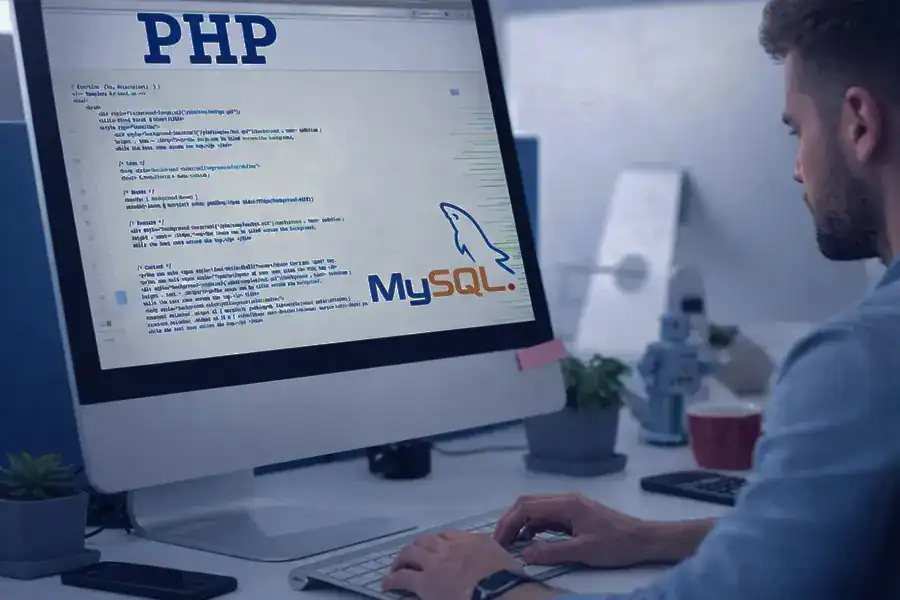


The best PHP & MySQL course / Web Development course in Kochi, Kerala. Gain hands-on training in PHP and MySQL through our industry-focused PHP & MySQL course. Learn to build dynamic, database-driven websites with our professional PHP and MySQL course and start your career in web development.
Batch Start Date
09th Mar 2026
Admission Closing on
07th Mar 2026
Available Seats
12 Seats
Course Duration
2 Months
PHP and MySQL is a popular combination used to build dynamic and data-driven websites, and a professional PHP & MySQL course helps learners understand how these technologies work together. PHP manages the backend logic and user requests, while MySQL stores and organizes website data, which you can master through a practical PHP and MySQL course. Together, they help create interactive features like login systems, forms, dashboards, e-commerce sites, and content management systems, making a PHP & MySQL course essential for modern web development. Known for being flexible, reliable, and cost-effective, PHP-MySQL is widely used by developers and businesses to build secure and scalable web applications. Enrolling in a PHP and MySQL course helps you gain real-world development skills, while an advanced PHP & MySQL course prepares you for industry requirements. Choosing the right PHP and MySQL course can help you build a strong foundation for a successful web development career.
This is arguably the most dominant application. WordPress, the CMS that powers over 40% of all websites, is built entirely on PHP and uses MySQL for its database. Other major CMS platforms like Joomla and Drupal also rely on this stack to manage content, user roles, and site architecture efficiently.
For platforms that handle massive user interaction, profiles, and data feeds, PHP’s speed and MySQL’s reliability are crucial. Facebook notably began and continues to use a highly optimized version of PHP for its core infrastructure to manage billions of users and their connections.
PHP-MySQL creates powerful and secure online stores. WooCommerce (the e-commerce plugin for WordPress) and Magento (now Adobe Commerce) are prime examples, utilizing the stack for inventory management, product catalog systems, secure transaction processing, and user order history.
Sites that manage vast amounts of rapidly accessed, user-contributed content rely on this stack. Wikipedia, for instance, uses PHP and MySQL/MariaDB to handle its enormous volume of articles and high daily traffic with speed and stability.
Many popular business and utility applications, particularly in the email marketing and creative sectors, rely on PHP and MySQL for their backend data processing and storage.
Developing bespoke solutions for specific business needs, such as Inventory Management Systems, Hospital Management Systems, Library Management Systems, and Student/School Management Systems.
Creating real-time platforms for bus ticket reservations, online hotel bookings, or doctor appointment scheduling, all of which require complex, concurrent database transactions.
Building platforms that manage user accounts (job seekers and employers), job listings, and application tracking systems.
Anyone who wants to build dynamic, database-driven websites can learn the PHP and MySQL course, including students, beginners, job seekers, and working professionals. This course is perfect for freshers, non-technical learners, web designers, freelancers, and entrepreneurs who want to start a career in backend or full stack web development.
Learning PHP and MySQL opens the door to in-demand career roles such as :
PHP Developer, Backend Developer, Web Developer, and Junior Full Stack Developer in IT companies, startups, and digital agencies. PHP-MySQL is widely used for building dynamic websites, content management systems, e-commerce platforms, business portals, and database-driven web applications, making it a valuable and practical skill in the web development industry.
No prior coding experience is required, as the course starts from the basics and progresses step by step.
Yes, PHP and MySQL is widely used in real-world applications and continues to be in demand in web development.
Yes, PHP and MySQL provides a strong foundation for learning frameworks like Laravel and CodeIgniter.
Yes, anyone from any background can learn PHP and MySQL with proper guidance and practice.
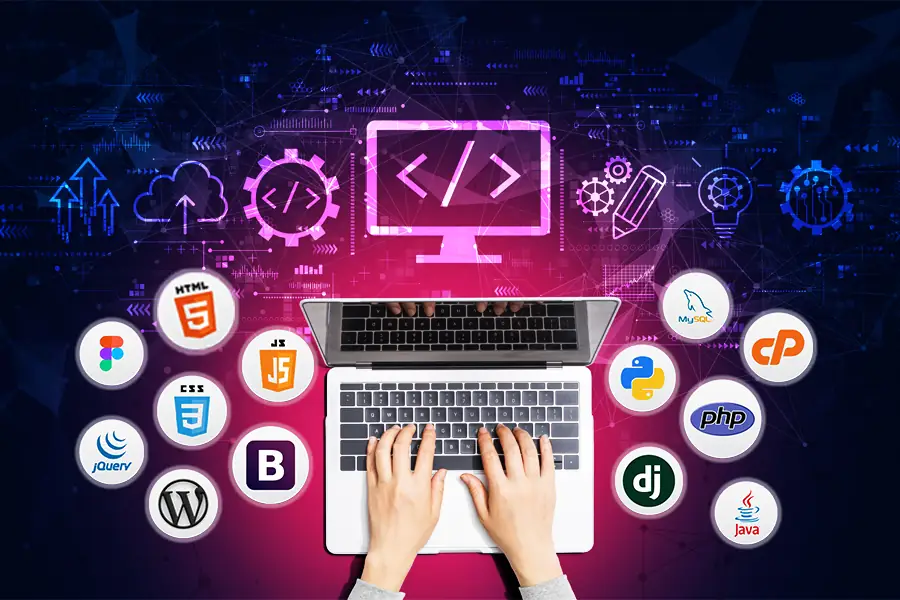
Expert in Advanced Web Design & Development
7 Months
Python Django Full Stack Development
7 Months

Digital Marketing
3 Month

WordPress Web Development
1 Month & 2 Months

Graphic Design
4 Months & 6 Months
Responsive Web Designing
3 Months

MERN Stack
7 Months
C & CPP
1 Month
53/2320-D, Opp. CKC LP School, Subhash Chandrabose Road, Ponnurunni, Vyttila, Kochi, Kerala, India – 682019
© Copyright 2026 Institute Of Web Technology. All rights reserved