
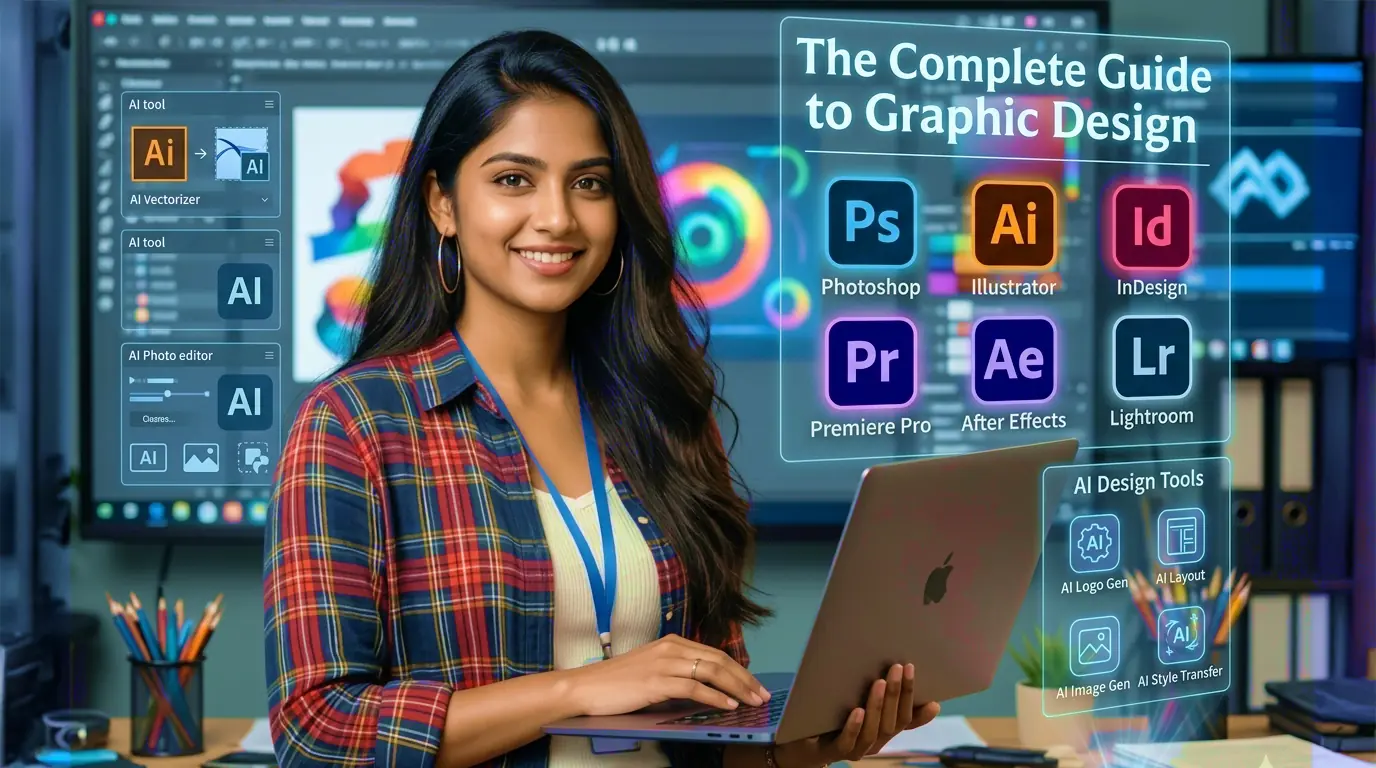
Overview
Graphic design has become one of the most essential skills in today’s digital world. From social media creatives and websites to advertisements and branding, design plays a key role in how businesses communicate with their audience. In 2026, graphic design is no longer just about creativity—it combines design principles, advanced tools, and digital strategy. Whether you are a beginner or someone looking to upgrade your skills, enrolling in a Graphic Design course can help you build a strong foundation in visual communication and understand real-world applications. For those aiming to gain practical, industry-ready experience, a Graphic Designing course provides hands-on training and live projects that prepare you for professional opportunities. Many learners today prefer combining a Graphic Design course with a Graphic Designing course to gain both theoretical and practical expertise.
What is Graphic Design?
Graphic design is the art of creating visual content to communicate ideas effectively. Designers use typography, colors, images, and layouts to deliver messages in a visually appealing way.
Graphic design is widely used in:
- Branding and logo design
- Social media graphics
- Website and UI design
- Advertising materials
- Print media
A well-structured Graphic Design course introduces these concepts step by step, while a Graphic Designing course helps you apply them in real-world scenarios.
Key Elements of Graphic Design
1. Typography
Typography involves selecting and arranging fonts to enhance readability and visual appeal.
2. Color Theory
Understanding colors helps create emotional connections and strengthens brand identity.
3. Layout and Composition
A well-structured layout ensures balance and clarity in design.
4. Visual Hierarchy
This guides the viewer’s attention to important elements.
5. Images and Graphics
High-quality visuals improve engagement and communication.
All these fundamentals are covered in a professional Graphic Design course, making it easier for beginners to start their journey.
Popular Graphic Design Tools in 2026
Modern designers rely on tools such as:
- Adobe Photoshop
- Adobe Illustrator
- Adobe InDesign
- Figma
- Canva
Learning these tools is a key part of any Graphic Designing course, helping you work efficiently on real-world projects. A practical Graphic Designing course also ensures that you gain hands-on experience with industry-standard tools.
Latest Graphic Design Trends in 2026
Minimalist Design
Clean, simple layouts with strong focus on content.
3D Design and Visuals
More realistic and immersive visual experiences.
AI-Assisted Design
AI tools are helping designers speed up workflows and generate ideas.
Bold Typography
Creative and large fonts are widely used in modern branding.
Motion Graphics
Animations are becoming essential in digital marketing.
Staying updated with these trends is easier when you learn through a Graphic Design course combined with a Graphic Designing course.
Why Learn Graphic Design in 2026?
High Demand
Businesses need designers for branding, marketing, and online presence.
Creative Career
Graphic design allows you to combine creativity with technology.
Freelancing Opportunities
You can work with global clients and build your own brand.
Career Growth
A Graphic Design course can lead to advanced roles like UI/UX designer or creative director. Many professionals upgrade their skills further through a Graphic Designing course to stay competitive.
Skills Required to Become a Graphic Designer
To succeed in graphic design, you need:
- Creativity and innovation
- Knowledge of design tools
- Understanding of color and typography
- Basic marketing knowledge
- Attention to detail
These essential skills are typically covered in a structured Graphic Designing course, while a Graphic Design course helps you understand the core principles behind them.
Career Opportunities in Graphic Design
After learning graphic design, you can explore roles such as:
- Graphic Designer
- UI/UX Designer
- Web Designer
- Branding Specialist
- Social Media Designer
- Freelance Designer
The demand for skilled designers continues to grow across industries. Completing a Graphic Design course along with a Graphic Designing course can significantly improve your job opportunities.
Who Can Learn Graphic Design?
Graphic design is suitable for:
- Students
- Job seekers
- Freelancers
- Entrepreneurs
- Anyone interested in creativity
Even beginners can start their journey with a Graphic Design course and gradually build professional skills through a Graphic Designing course.
Future of Graphic Design
The future of graphic design is evolving rapidly with technologies like AI, AR/VR, and digital media. Designers who continuously upgrade their skills will have more opportunities in the industry. A professional Graphic Designing course helps you stay updated with the latest tools, trends, and industry requirements, while a Graphic Design course ensures your fundamentals remain strong.
Conclusion
Graphic design in 2026 is a powerful combination of creativity and technology. It plays a vital role in shaping brand identity and digital communication. Whether you are just starting out or looking to enhance your skills, learning graphic design can open doors to exciting career opportunities. By enrolling in a Graphic Design course and advancing through a Graphic Designing course, you can gain the knowledge and practical experience needed to succeed in this dynamic field.
- Digital Marketing
- Graphic Design
- MERN Stack
- Python Django
- Technology Trends
- Tutorials
- UI/UX Designing
- UX/UI Design
- Web Designing
- Web Development
- WordPress
- Back
- Python Django Tutorial
- WordPress Tutorial
- Graphic Design Tutorial
Discover the top free tools for graphic designers in 2026 that help you create professional designs without expensive software. Whether...
Discover the power of graphic design in digital marketing, branding, and social media, and how it helps businesses create a...
Discover how AI is transforming graphic design in 2026, from powerful tools to faster workflows and smarter creativity. Whether you’re...